
SOLUTIONS FROM ACROSS NEW HAMPSHIRE
Lake Protection in Action
Real projects that tackle the causes of lake pollution—slowing runoff, reducing erosion, and restoring natural shorelines.
Protecting our lakes takes more than understanding the threats. Across New Hampshire, lake associations, towns, and property owners are putting practical solutions to work—slowing stormwater runoff, reducing erosion, restoring natural vegetation, and keeping pollutants out of the water.
In the fall of 2024, NH LAKES partnered with the New Hampshire Department of Environmental Services to award $400,000 in American Rescue Plan Act funding for lake-protection projects in six New Hampshire communities. The projects were completed by the end of summer 2026. They demonstrate approaches that can help protect water quality and may inspire similar efforts in the Silver Lake watershed.
Project details and photographs courtesy of NH LAKES.
NATURE-BASED SOLUTIONS
Restoring Shorelines and Lakefront Properties
Native plants, stone drainage, and other simple measures help hold soil in place and slow runoff before it reaches the water.
LAKE SUNAPEE PROTECTIVE ASSOCIATION
Addressing shoreline erosion with nature-based solutions
Where: Georges Mills Town Beach and Little Lake Sunapee, with the Town of Sunapee and the Little Lake Sunapee Protective Association
The problem: Bare, eroding shoreline with no vegetation to hold the soil in place.
What was done: Volunteers planted nearly 400 native shrubs and perennials, supported by a stone trench and infiltration steps.
How it helps: The plantings stabilize the shoreline and create a natural buffer between developed areas and the water, helping reduce the soil and other pollutants that wash into the lake.
BEFORE
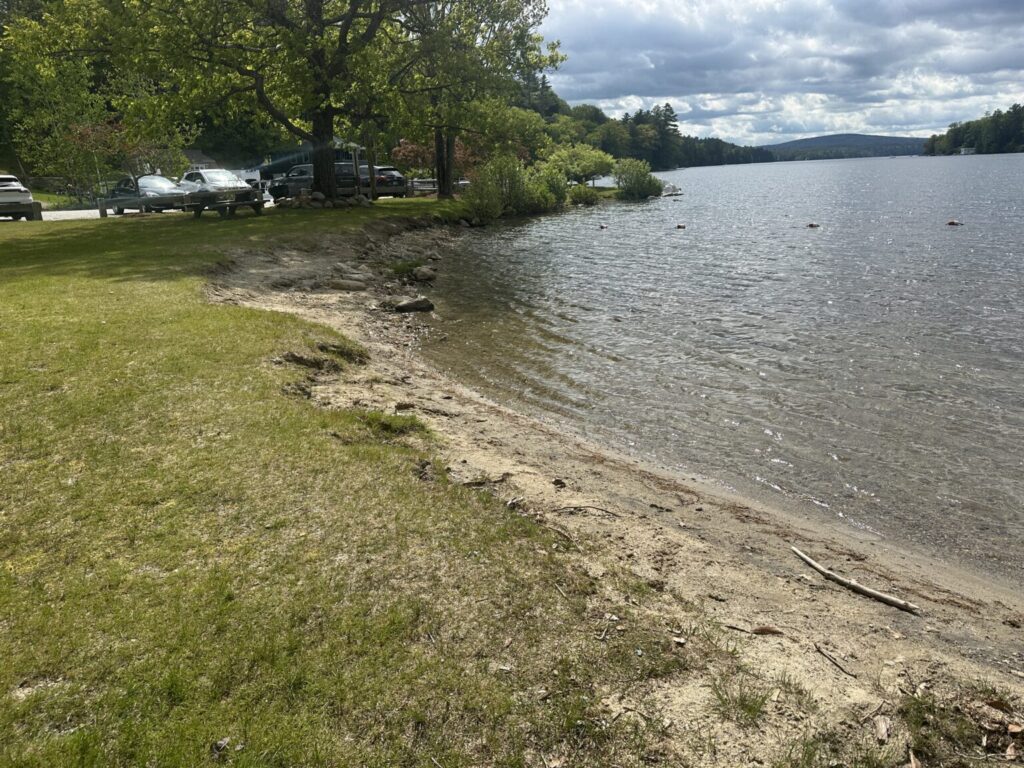
A bare shoreline with nothing to hold the soil.
AFTER
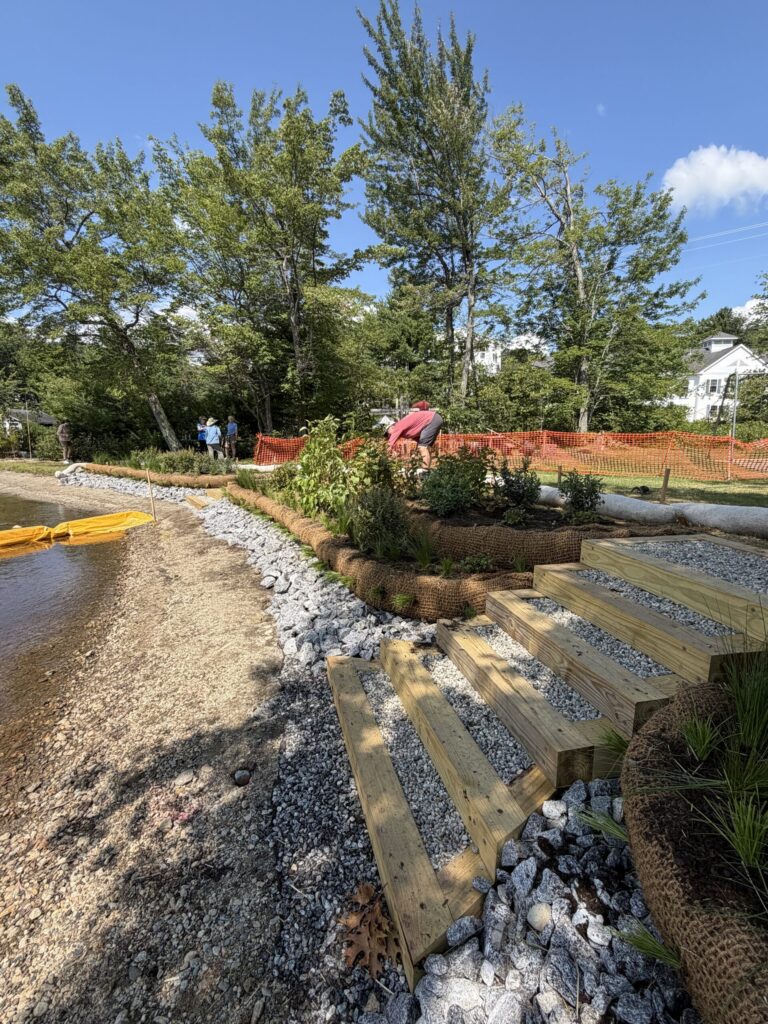
Native plants, a stone trench, and infiltration steps now hold the shoreline.
Photos courtesy of NH LAKES
ACTON WAKEFIELD WATERSHED ALLIANCE
Reducing runoff pollution around four lakes
Where: Lovell Lake, Pine River Pond, Great East Lake, and Province Lake
The problem: Stormwater was carrying soil and sediment toward the lakes, including from eroding roads near Pine River Pond.
What was done: The alliance’s Youth Conservation Corps worked on 15 lakefront properties to reduce pollution, and the alliance fixed erosion on two nearby roads that drain to Pine River Pond.
How it helps: Better drainage gives stormwater a safer path off the roads, while stone drainage and native plantings slow, spread, and absorb runoff before it reaches the water.
BEFORE
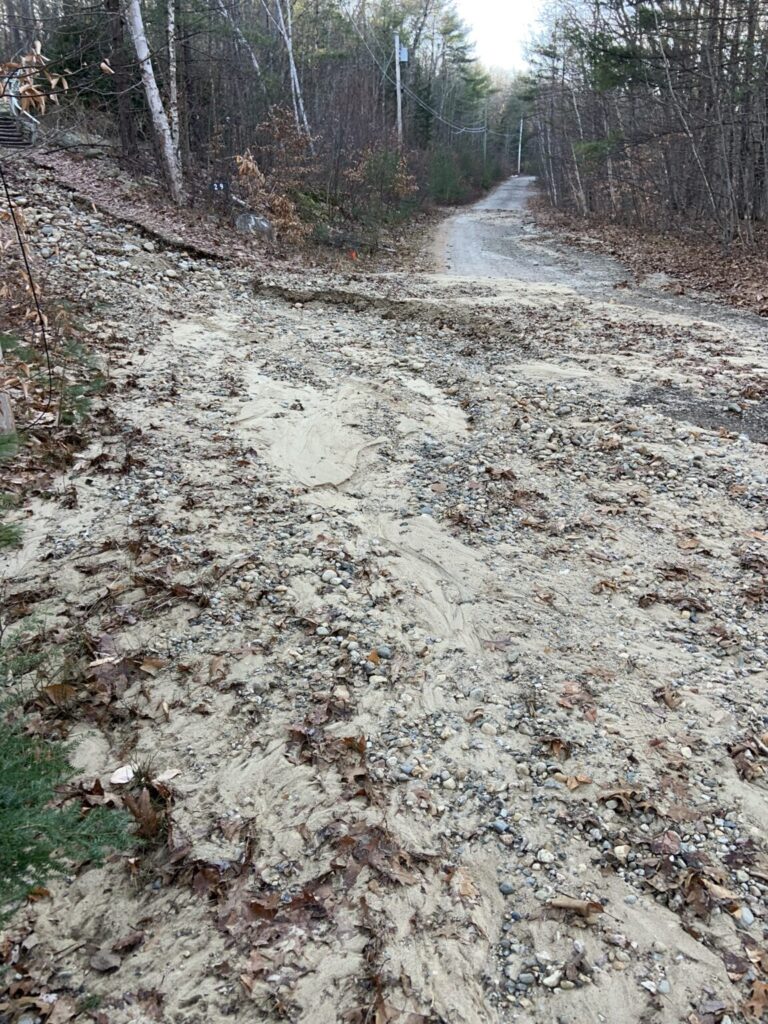
Poor drainage sent rocks and sediment across the road toward the lake.
AFTER
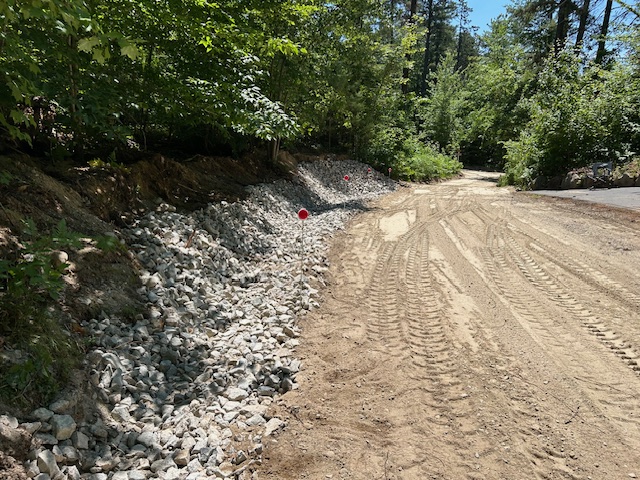
Improved drainage gives stormwater a safer path off the road.
BEFORE
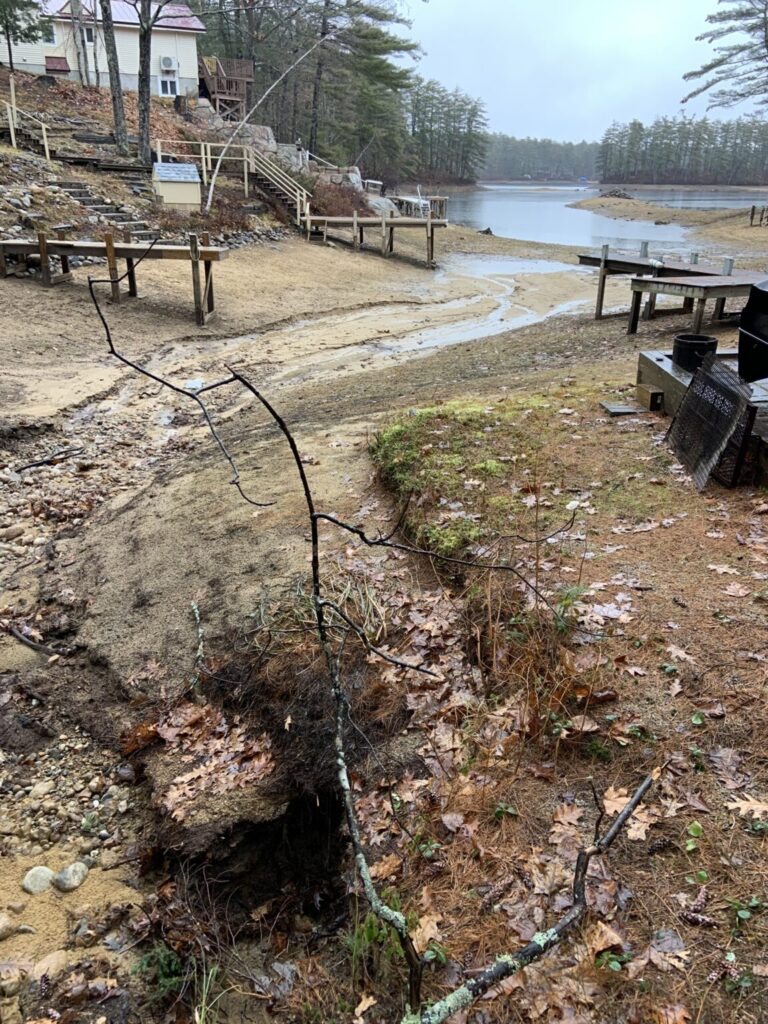
Runoff carried soil and sediment directly into the lake.
AFTER
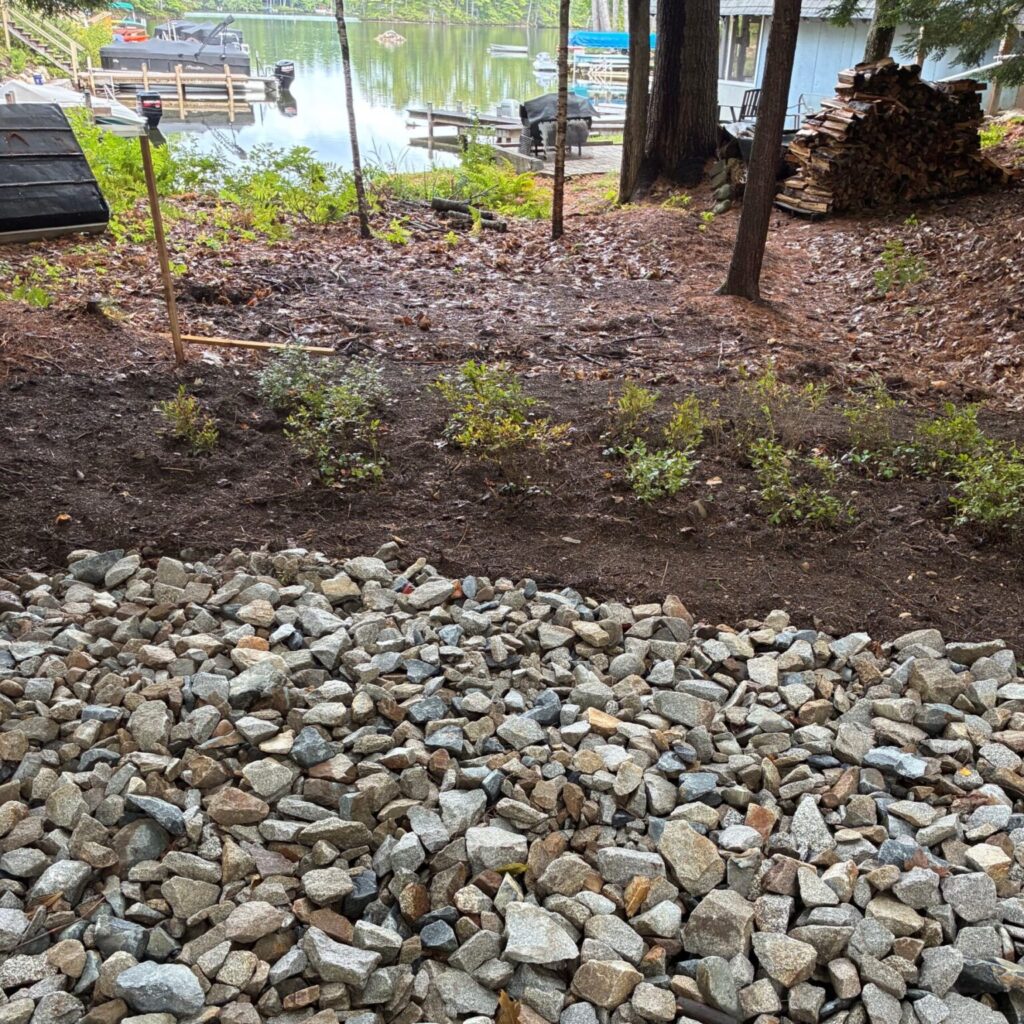
Stone drainage and native blueberry bushes slow and absorb runoff.
Photos courtesy of NH LAKES
STORMWATER MANAGEMENT
Fixing Runoff at Roads and Access Points
Roads, boat ramps, and public access points can channel stormwater—and the sediment and nutrients it carries—straight toward a lake. These projects gave that water a safer path.
COUNTRY POND LAKE ASSOCIATION & TOWN OF NEWTON
Improving stormwater management at Country Pond
Where: The Town of Newton boat ramp on Country Pond
The problem: Stormwater carried sediment down the boat ramp and directly into the pond.
What was done: The association and the town rebuilt the boat ramp with improved drainage. The project also included water quality monitoring, outreach, and education.
How it helps: Drainage along the edges of the ramp captures and redirects runoff, helping keep sediment and phosphorus out of the pond.
BEFORE
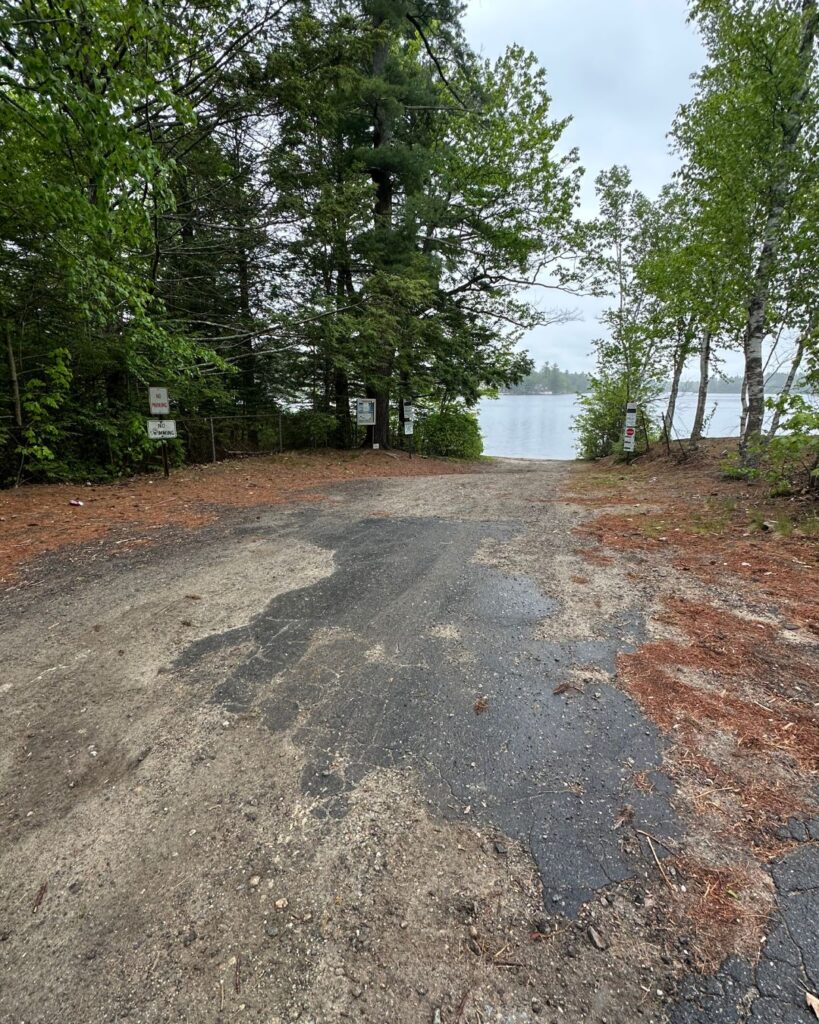
Stormwater carried sediment down the ramp into the pond.
AFTER
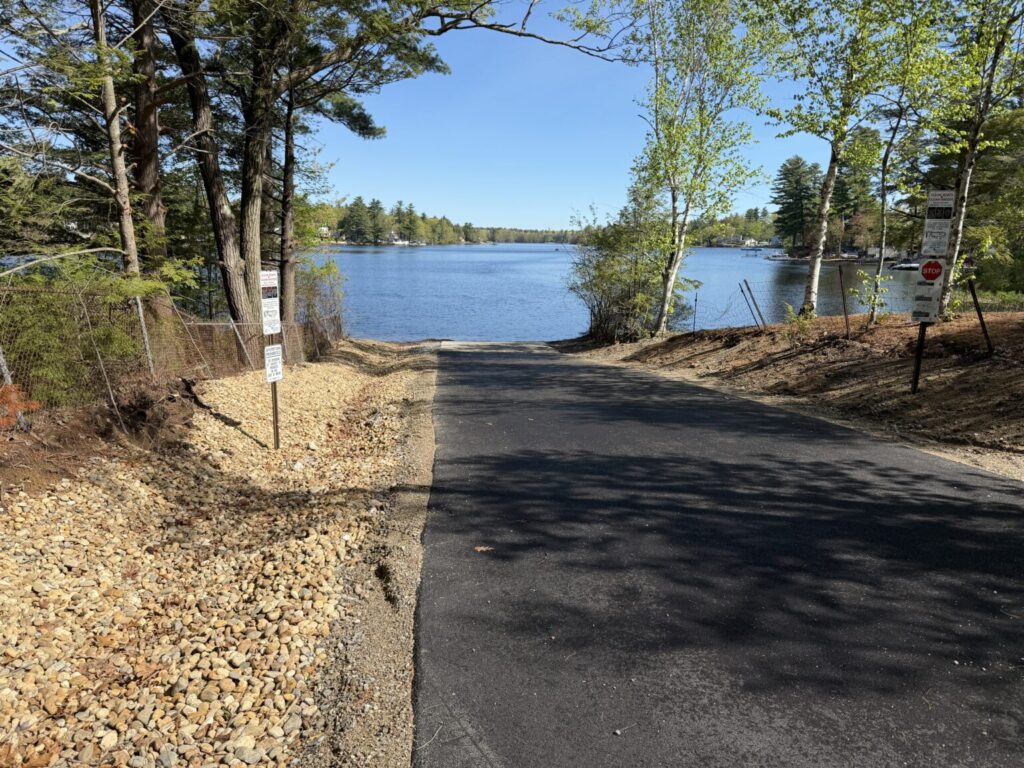
Drainage along the ramp edges captures and redirects runoff.
Photos courtesy of NH LAKES
TOWN OF ALTON
Reducing stormwater pollution flowing toward Lake Winnipesaukee
Where: The public access at Mill Pond, which drains into Lake Winnipesaukee
The problem: Runoff from the road flowed toward the public access at Mill Pond, carrying sediment and causing erosion.
What was done: The town completed road improvements that slow and redirect stormwater, while also improving public access to Mill Pond and traffic safety at the Letter S Road intersection.
How it helps: Addressing runoff at its source helps reduce the sediment and other pollutants carried downstream during rain events.
BEFORE
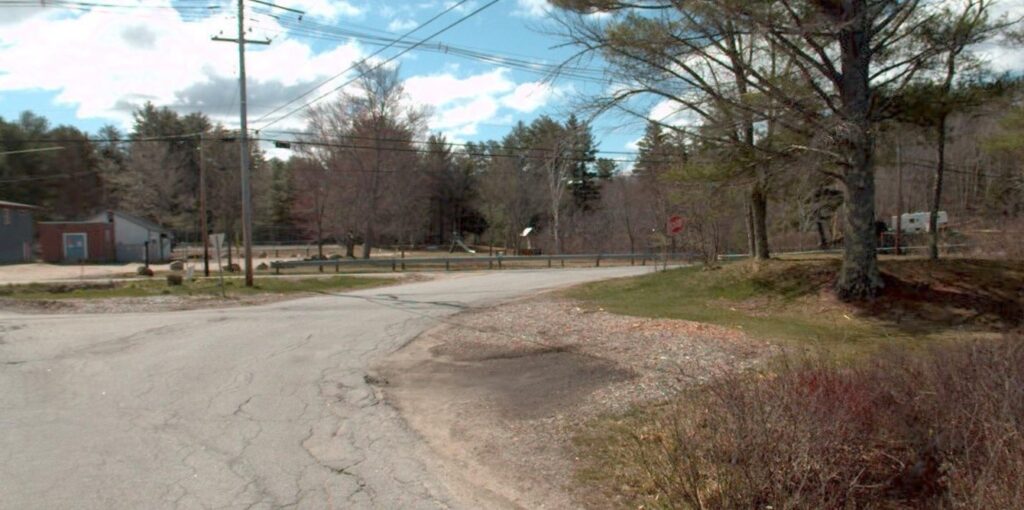
Road runoff flowed toward the Mill Pond access, carrying sediment.
AFTER
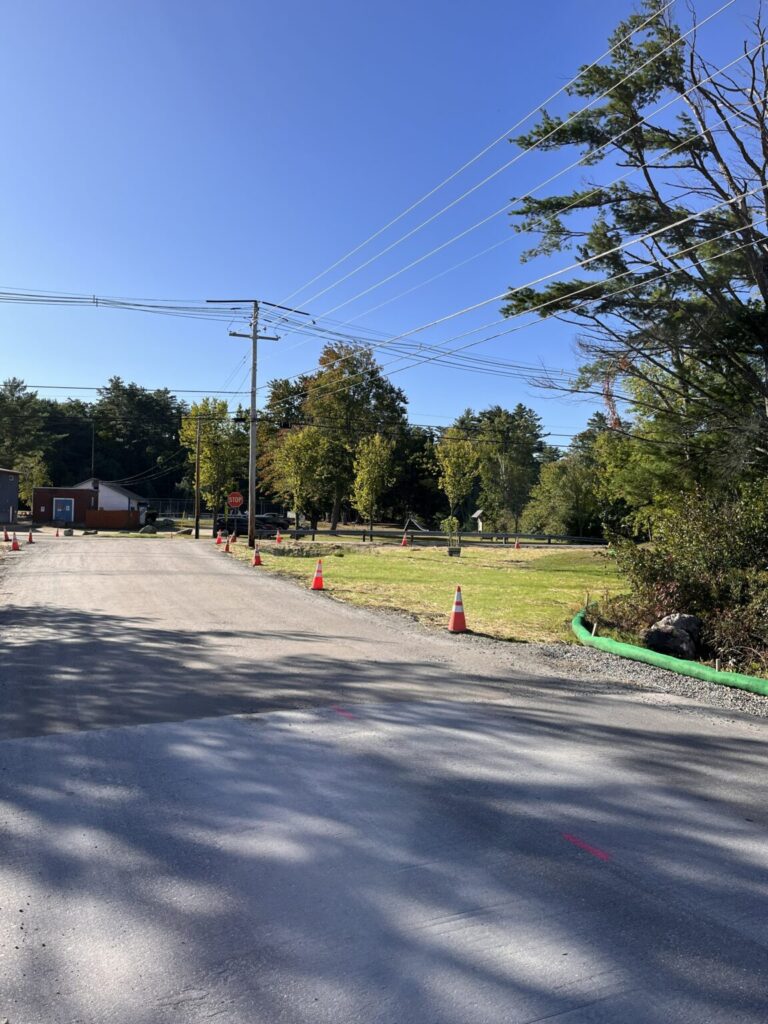
Road improvements slow and redirect stormwater away from the pond.
Photos courtesy of NH LAKES
WENTWORTH WATERSHED ASSOCIATION
Slowing runoff from gravel roads at Lake Wentworth
Where: Gravel roads near Red Brook Circle, with matching funds from the Town of Wolfeboro and Wentworth Estates residents
The problem: Stormwater running off gravel roads was entering Lake Wentworth.
What was done: The association improved how stormwater moves across the roads, slowing it and letting it soak in. The project was one of the highest priorities in the association’s Watershed Management Plan.
How it helps: Slowing and infiltrating runoff helps reduce erosion and the amount of sediment and phosphorus reaching the lake.
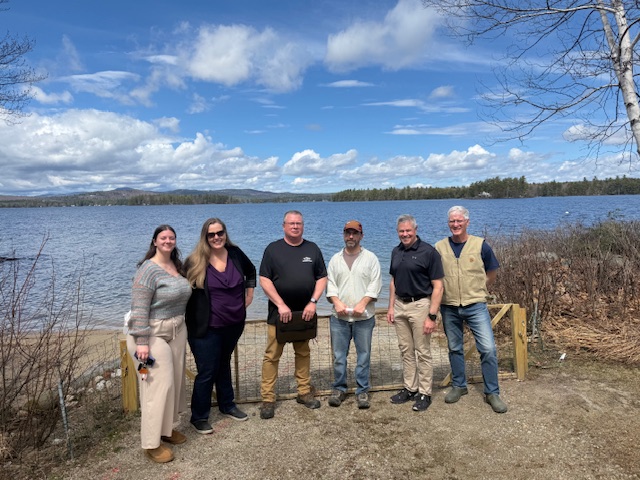
Members of the Wentworth Watershed Association, the Town of Wolfeboro, and the local community worked together to put the project into action.
Photo courtesy of NH LAKES
WATERSHED PLANNING
Planning for the Whole Watershed
Knowing where pollution comes from helps a community decide where to act first.
WHITE OAK POND ASSOCIATION
Identifying pollution sources to guide future action
Where: The White Oak Pond watershed
The problem: Cyanobacteria blooms have affected the pond in recent years.
What was done: The association completed a Watershed-Based Management Plan that identifies sources of pollution and provides a roadmap for addressing them.
How it helps: The plan gives the community a stronger foundation for prioritizing future lake-protection work and reducing the pollutants that can contribute to cyanobacteria blooms.
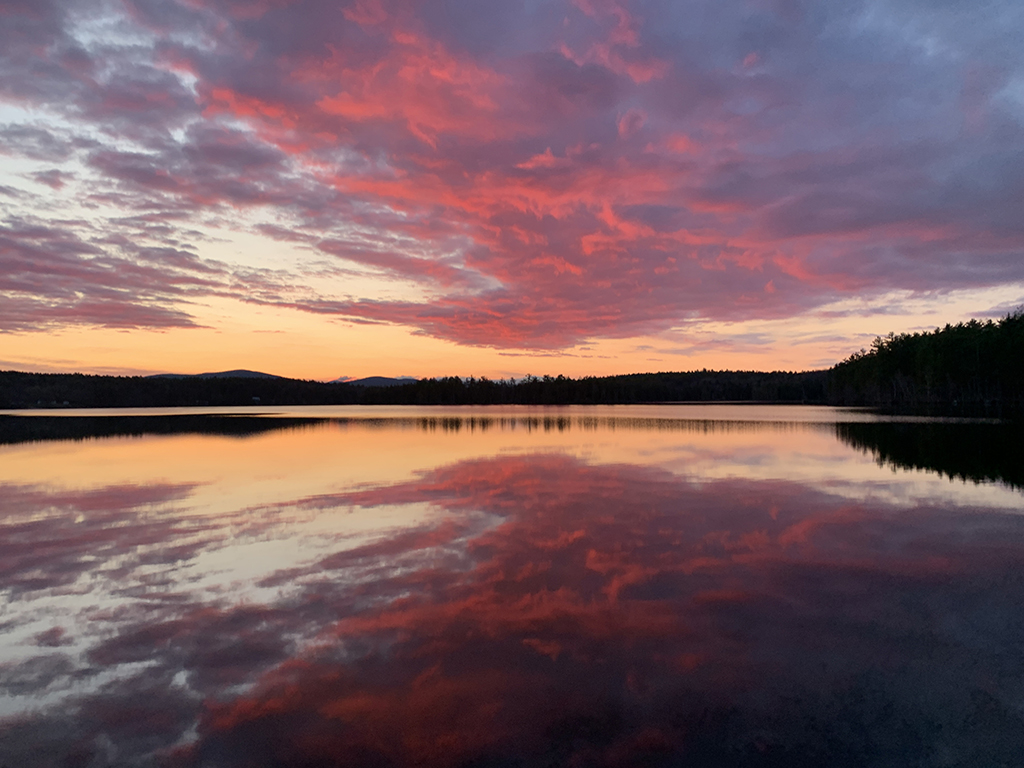
White Oak Pond. The new plan identifies opportunities to reduce stormwater runoff, erosion, and pollution.
Photo courtesy of NH LAKES
CLOSER TO HOME
What We Can Do Here in Madison
These projects illustrate approaches that may also be useful in the Silver Lake watershed, depending on local conditions and appropriate planning.
Some solutions, such as managing road drainage, reducing salt use in winter, and making boat-ramp improvements, involve towns and larger partnerships. Others begin on individual properties, where native plantings, natural shorelines, and simple drainage fixes help keep soil and nutrients out of the lake.
Homeowner Resources →
Practical guides to reducing runoff and erosion on your property.
Watershed Management →
How SLAM is working to understand and protect the Silver Lake watershed.
LakeSmart →
A free, voluntary NH LAKES program that SLAM coordinates locally.
Source: NH LAKES, “Fighting Back Against Cyanobacteria: NH LAKES Awards Grants to Protect Our Waters” by Erin Mastine. Project descriptions are summarized and photo captions adapted from the original article. The projects were carried out by the organizations and communities named above. Photographs courtesy of NH LAKES and used with permission.